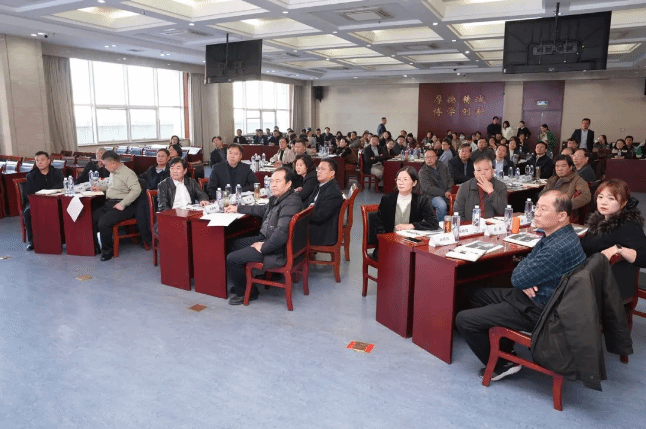
To thoroughly implement the requirements of the Fifth Plenary Session of the 20th CPC Central Committee on strict governance of officials and building a high-quality cadre team, consolidate cadre management capabilities, and boost the hospital’s high-quality development, the Second Affiliated Hospital of Shandong First Medical University (Second School of Clinical Medicine) held a training class on improving the capabilities of mid-level cadres under the theme of “Accountable Leadership” on the afternoon of November 20. Cao Mingfeng, Secretary of the Party Committee, presided over the training. Hospital leaders present, secretaries of general Party branches, and directors and deputy directors of functional departments participated in the training.
The training invited Zhang Yumei, a senior management expert, to give a lecture. Combining the actual scenarios of hospital management, the course systematically explained standards for accountable behavior and the building of a team culture of accountability. Through case analysis, it guided participants to shift from “focusing on execution actions” to “focusing on outcome value,” and taught management methods such as building consensus on goals, leading by example, and creating a positive atmosphere, helping participants energize team effectiveness and improve management capabilities.
During the training, Cao Mingfeng pointed out that the Fifth Plenary Session of the 20th CPC Central Committee set clear requirements for building a politically sound and highly competent cadre team, and that this training was a concrete measure to align with the spirit of the plenary session and strengthen cadre education and training. He emphasized that mid-level cadres should break away from the inertial mindset of “prioritizing process over results,” use the concept of accountability to guide department development, stimulate internal motivation from within, build team synergy outwardly, foster a hospital culture of proactive responsibility, and consolidate the management foundation for the hospital’s high-quality development with strong management capabilities. He required that the concept of accountability learned in this training be integrated into daily management practice, that implementation be vigorously pursued in core work such as addressing departmental business weaknesses, optimizing services, and cultivating talent, and that training outcomes be effectively transformed into practical results in improving the quality and efficiency of medical services and upgrading discipline construction, so as to provide solid management support for the hospital to continuously enhance its core competitiveness and better fulfill the public welfare service responsibilities of a public hospital.
